

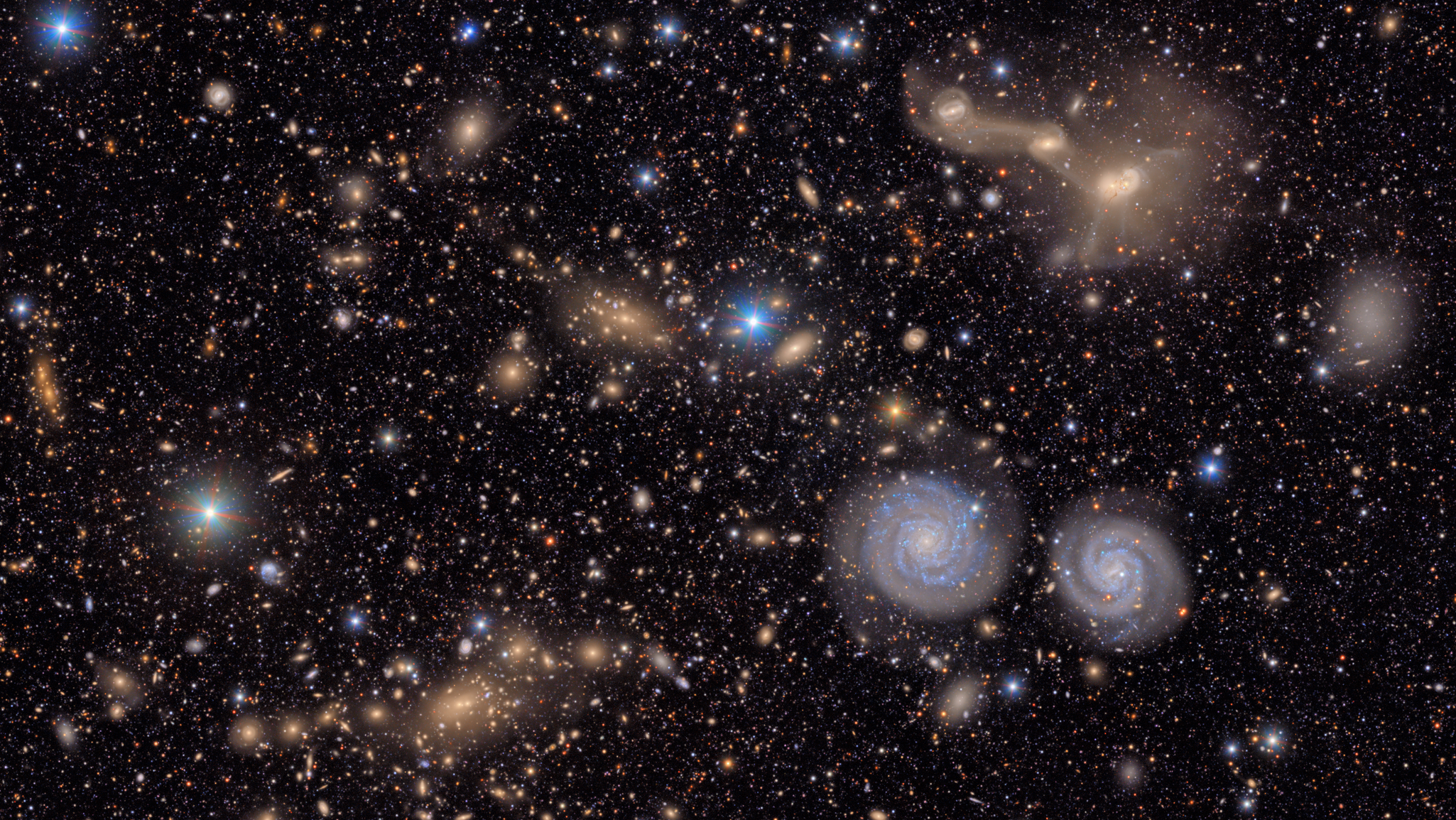
The Universe is the ultimate cosmic playground, an enormous space that holds everything that exists, from the tiniest particles to the largest galaxies. It is home to billions of galaxies, each filled with billions of stars, planets, black holes, and mysteries we are only beginning to understand. Our own Milky Way galaxy is just a tiny piece of this vast, ever-expanding cosmos.
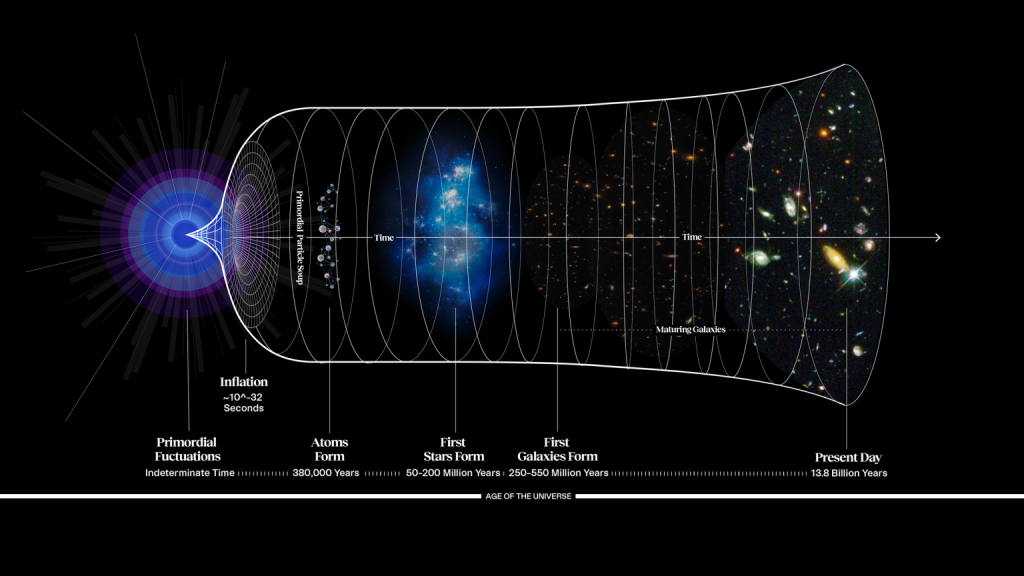
The Universe is expanding, which means galaxies are moving away from each other, and it has been growing since the Big Bang, about 13.8 billion years ago. It is made up of things we can see, like stars and planets, and also mysterious stuff we cannot see, called dark matter and dark energy, which make up most of the Universe.
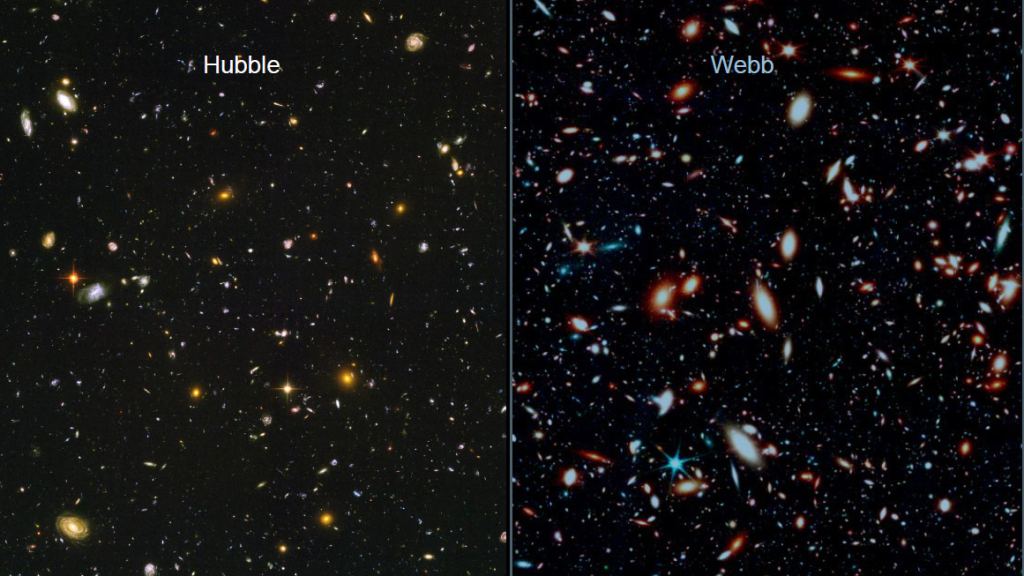
Astronomers explore the Universe using telescopes, satellites, and space probes, discovering everything from black holes and neutron stars to exoplanets that might host life. Even though the Universe is almost incomprehensibly huge, studying it helps us understand where we come from, how stars and galaxies form, and what the future of space might hold.
Universe Facts
- Age of the Universe – The Universe is about 13.8 billion years old.
- Number of Galaxies – There are estimated to be over 2 trillion galaxies, each with billions of stars.
- Expanding Universe – Galaxies are moving away from each other, and the Universe has been expanding since the Big Bang.
- Dark Matter and Dark Energy – Most of the Universe is made of stuff we cannot see. Dark matter holds galaxies together, and dark energy drives the expansion of the Universe.
- Speed of Light Limits – Light from the farthest galaxies takes billions of years to reach us, so telescopes show the Universe as it was long ago.
- Extreme Objects – The Universe contains black holes, neutron stars, and supernovae, which are among the most extreme environments in existence.
- Cosmic Web – Galaxies are not evenly spread out but form a vast web-like structure with filaments and voids.
- Observable Universe – The part we can see is about 93 billion light-years across, but the entire Universe may be much larger.
- Exoplanets – There are thousands of planets outside our solar system, some of which might support life.
- Endless Exploration – Humans continue to explore the Universe using telescopes, satellites, and space probes, discovering new stars, galaxies, and cosmic phenomena all the time.