

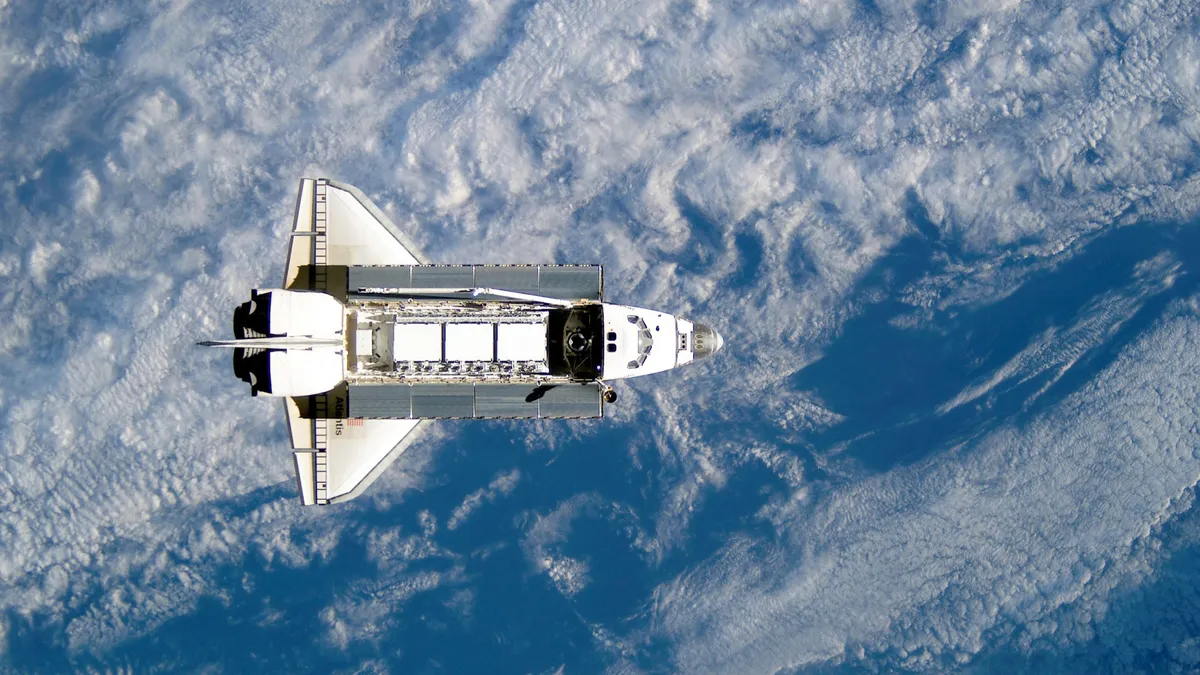
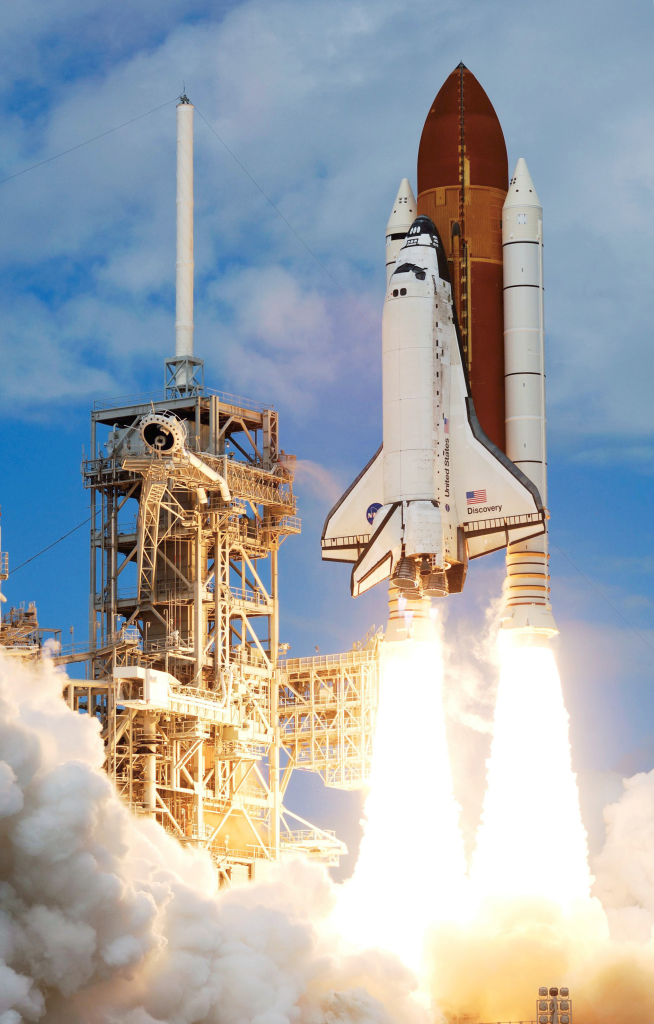
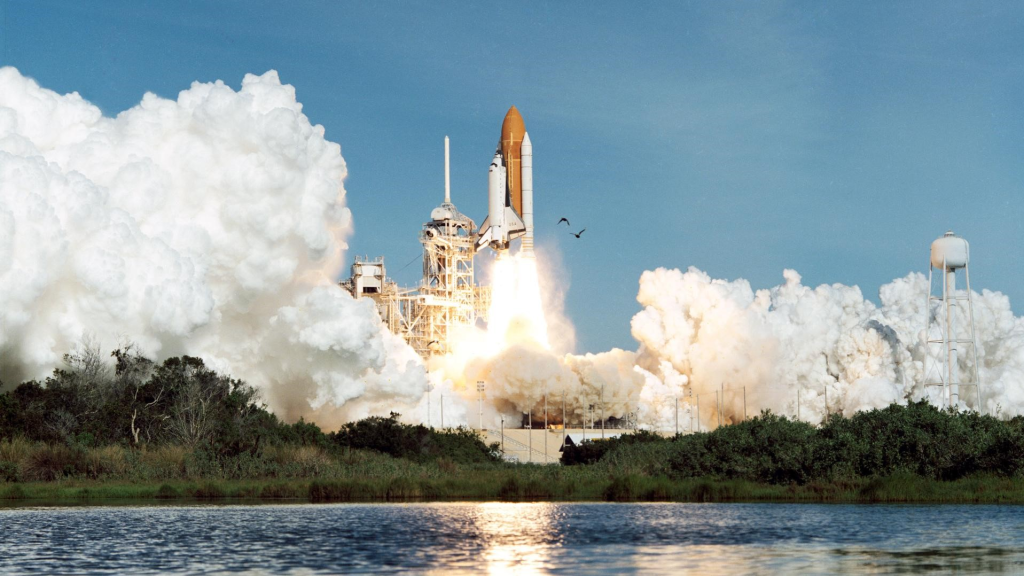
The Space Shuttle was NASA’s reusable spacecraft that made space travel look almost routine. Unlike traditional rockets that were used only once, the shuttle could launch like a rocket, orbit like a spaceship, and land like a plane. First launched in 1981, shuttles carried astronauts, satellites, and parts of the International Space Station (ISS) into space.
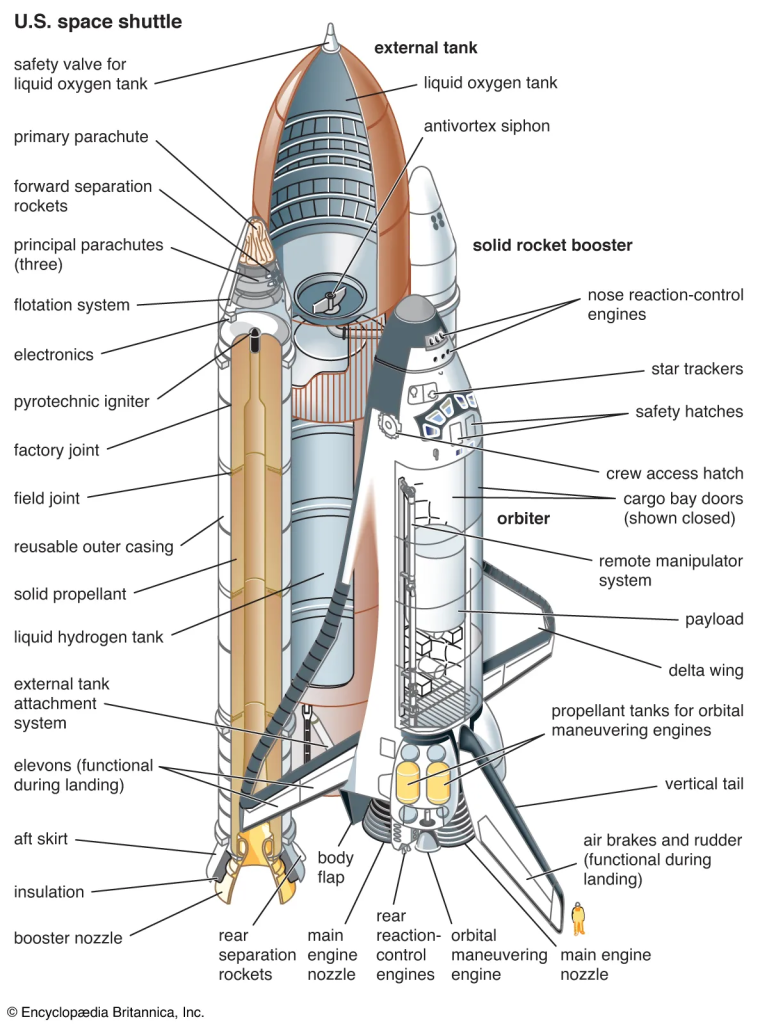
The shuttle had three main parts: the orbiter (where astronauts lived and worked), the external fuel tank, and the two solid rocket boosters. After launch, the boosters separated and fell into the ocean, while the orbiter continued into orbit. In space, astronauts could conduct experiments, repair satellites, and even help assemble the ISS, sometimes spending weeks in microgravity.
The Space Shuttle was one of the most amazing achievements in human spaceflight. Unlike traditional rockets that were used once, the shuttle was reusable, able to fly multiple missions over its lifetime. NASA launched the first shuttle, Columbia, in 1981, and the program ran until 2011. In total, five orbiters—Columbia, Challenger, Discovery, Atlantis, and Endeavour—flew over 130 missions.
When its mission was complete, the orbiter re-entered Earth’s atmosphere and glided back to a runway landing. Over the 30-year program, five orbiters flew more than 130 missions, proving that reusable spacecraft were possible and inspiring a new era of space exploration. The shuttle was a bridge between early space missions and the modern, commercial spacecraft of today.
Here are some fascinating facts:
- The orbiter could carry up to 8 astronauts and 50,000 pounds of cargo into orbit.
- The shuttle’s solid rocket boosters provided most of the thrust to escape Earth’s gravity and were recovered from the ocean and reused.
- The external fuel tank was the largest single component, holding over 500,000 gallons of liquid hydrogen and oxygen, but it burned up in the atmosphere after launch.
- Shuttles could orbit Earth for up to two weeks, giving astronauts time to repair satellites, conduct experiments, and even help build the International Space Station.
- The shuttle’s thermal tiles protected it from the extreme heat of re-entry, which could reach over 1,650°C (3,000°F).
- It landed like a glider, without engines, on a runway—essentially a spaceplane.
The Space Shuttle program transformed space exploration, making it more routine, flexible, and ambitious. It proved that humans could live and work in orbit for extended periods, repair and deploy satellites, and pave the way for modern spacecraft like SpaceX’s Crew Dragon and Boeing’s Starliner.