

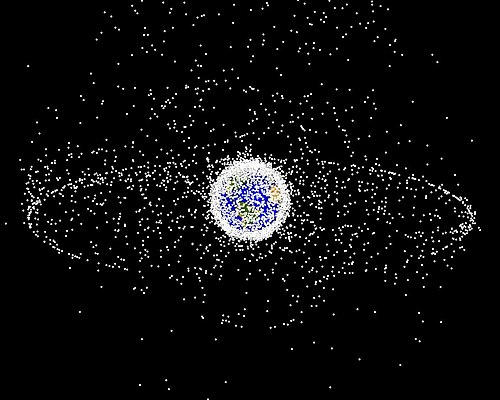
Space collisions happen when two objects in space crash into each other, which can involve satellites, asteroids, or debris orbiting Earth. Even though space is enormous, there are thousands of satellites and millions of pieces of space junk, so collisions are a real risk.
When objects collide in orbit, they can create even more debris, which can threaten other satellites and spacecraft in a chain reaction called the Kessler Syndrome. This is why space agencies track space debris carefully and sometimes move satellites to avoid crashes.
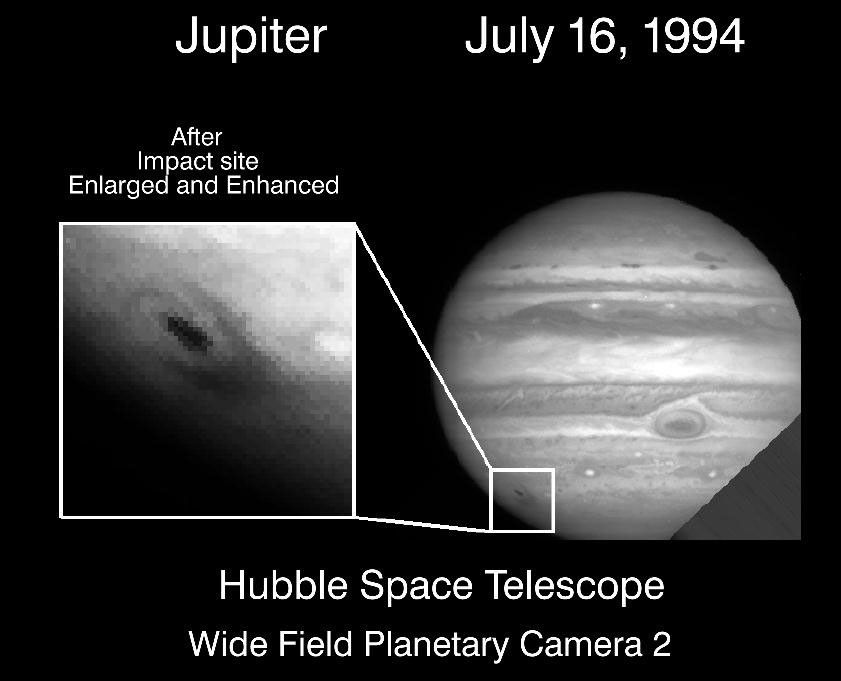
Space collisions aren’t just about satellites; asteroids and comets can also hit planets. Studying these collisions helps scientists understand how planets formed, how life survived on Earth, and how to protect our planet in the future.
Galaxy collisions happen when two or more galaxies come close enough for their gravity to pull on each other. Even though galaxies are enormous, most of the space inside them is empty, so stars rarely crash directly into one another. Instead, the gravity distorts their shapes, creating spectacular features like long tails of stars called tidal tails.
When galaxies collide, they can trigger massive bursts of star formation, as clouds of gas and dust are compressed. Sometimes, the collision can even merge galaxies into a single, larger galaxy, a process that can take millions or even billions of years.
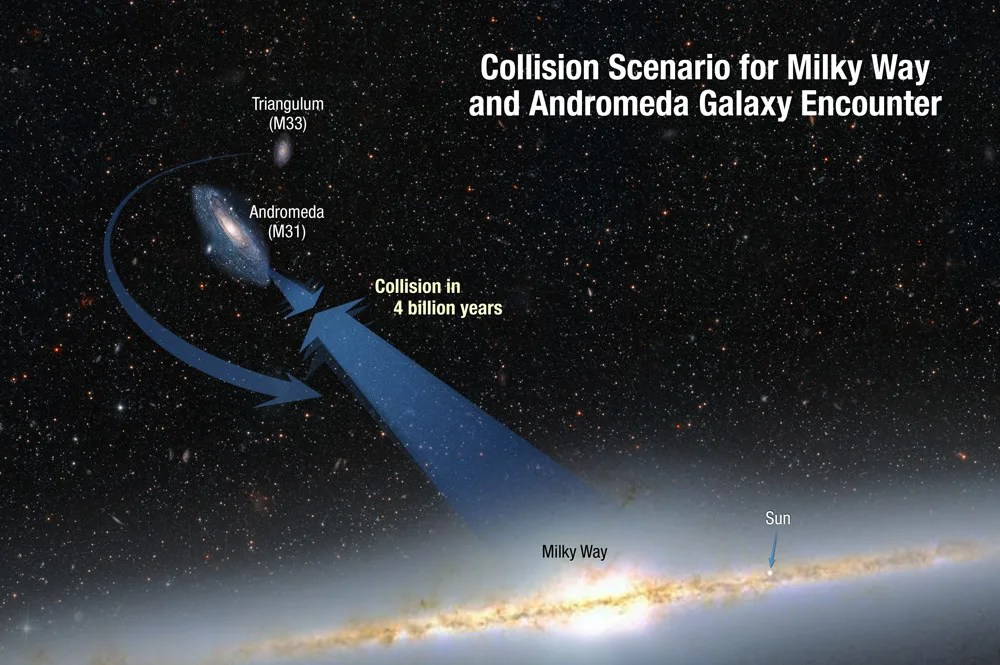
Our Milky Way is expected to collide with the Andromeda Galaxy in about 4 billion years, forming a new galaxy sometimes nicknamed “Milkomeda”. Observing galaxy collisions helps astronomers understand how galaxies evolve, how stars are born, and how the Universe changes over time.
5 Crazy Space Collision Facts
Tracking for Safety – NASA and other agencies constantly track space debris and move active satellites to avoid crashes, keeping space travel safer for astronauts and equipment.
Satellite Smashups – Over 500,000 pieces of debris orbit Earth, mostly from old satellites and rocket parts, and even tiny pieces can destroy a spacecraft.
Kessler Syndrome – A chain reaction of collisions could make certain orbits too dangerous for satellites, threatening communication and GPS systems.
High-Speed Crashes – Objects in space can hit each other at tens of thousands of kilometers per hour, faster than any car or jet on Earth.
Asteroid Impacts – Space collisions aren’t just around Earth; asteroids and comets have crashed into planets for billions of years, shaping their surfaces.