Introduction: Not Just a Return but A Revolution!
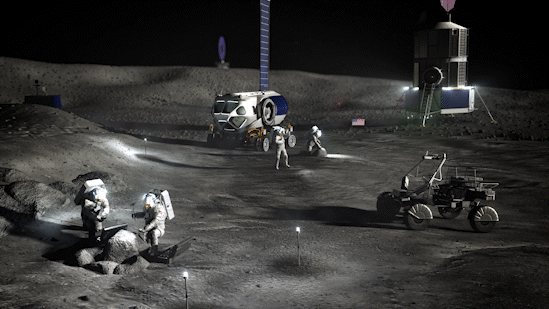
NASA’s Artemis III is more than a Moon mission, it is a turning point. Scheduled for mid-2027, Artemis III will land the first woman and the first person of color on the lunar surface, targeting the Moon’s South Pole, which is a region never before explored by humans.This mission isn’t just about going back; it’s about going forward toward sustained deep-space presence, scientific discovery, and ultimately, Mars. As a high school student fascinated by aerospace, I believe Artemis III isn’t just NASA’s mission. It is ours!
Artemis Program: A Brief Overview
The Artemis Program, named after the Greek goddess and twin of Apollo, represents NASA’s bold vision for the next era of space exploration. Here’s what sets it apart:
- Artemis I (2022): An uncrewed flight around the Moon to test the Space Launch System (SLS) and Orion spacecraft.
- Artemis II (2025): The first crewed mission to orbit the Moon in over 50 years.
- Artemis III (2027): The first human landing on the Moon since 1972—with a diverse crew and a new destination: the lunar south pole.
Artemis isn’t a one-and-done shot. It’s a multi-phase program laying the foundation for Gateway (a lunar orbital platform), Moon base camps, and eventually, crewed Mars missions.
Why Artemis III Is Historic
📍 New Landing Zone
Unlike Apollo, which focused on the equatorial region, Artemis III will explore the Moon’s South Pole, a region with permanently shadowed craters that may contain frozen water, critical for life support and fuel.
👩🏽🚀 Diverse Crew, Bold Vision
For the first time in history, the Moonwalkers will include a woman and a person of color, inspiring millions and redefining what space leadership looks like.
🛰️ Lunar Starship
NASA has partnered with SpaceX to modify Starship as the Human Landing System (HLS). It will ferry astronauts from lunar orbit (Gateway) to the surface, testing new tech for future Mars landings.
Final Thought
Artemis III isn’t just science fiction, it is science in motion. By contributing to the conversation, experimenting with lunar design, and leading outreach efforts, everyone can make an impact. Start your Artemis journey today and develop:
- Interdisciplinary thinking (engineering + science + policy)
- Passion for real-world impact
- Initiative and creativity
- Deep awareness of humanity’s next frontier
We didn’t choose to be born in the Artemis generation but we can choose to define it.
So build. Write. Code. Question. Explore. The Moon is only 384,400 km away, but the journey starts here.